Who needs a welder certificate?
Certificates are the basis for employing welders worldwide and a requirement in regulated industrial fields; clients in most EU countries require them too. Companies need them for EN 1090 and ISO 3834 certificates.
How does welder certification work?
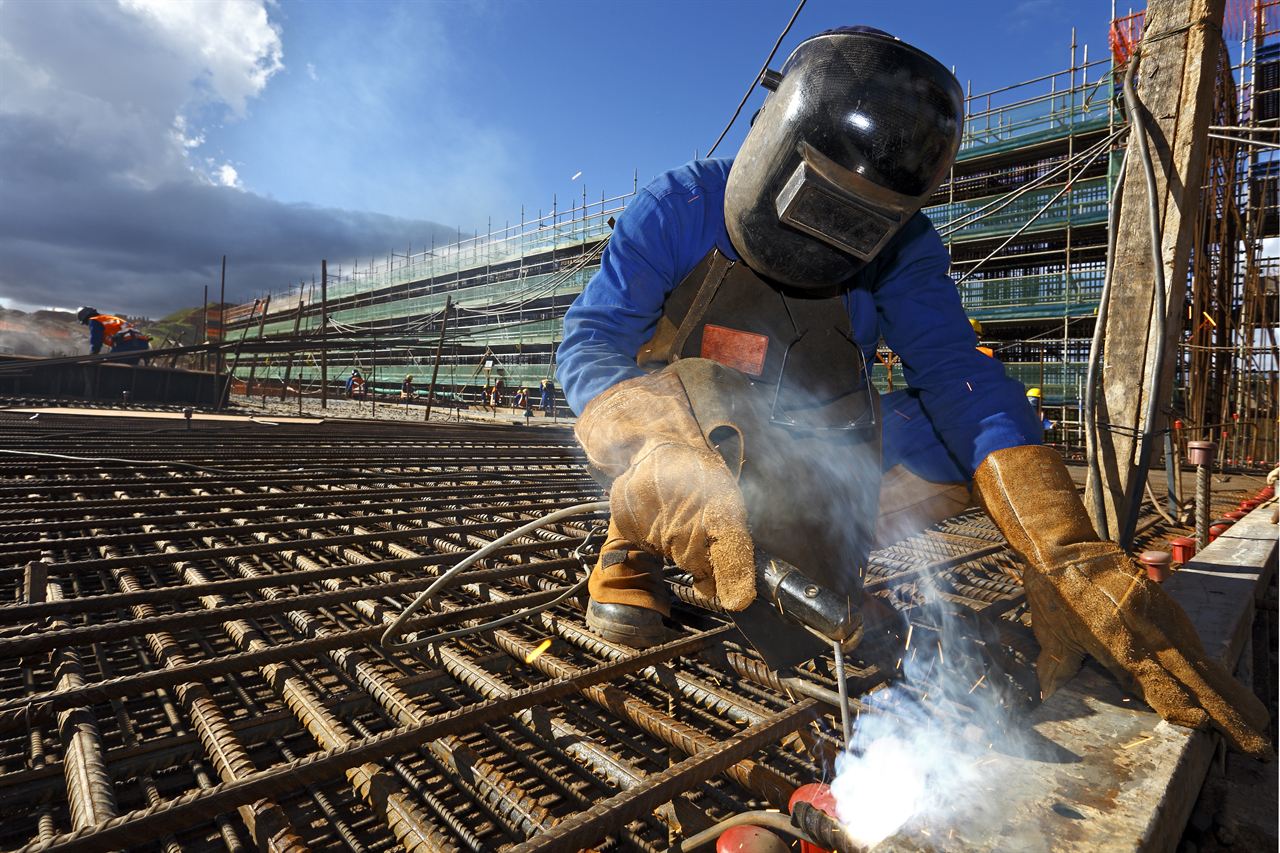
Besides practical verification of competence, certification also provides for a theoretical knowledge check in the form of a written exam. For the basic standards the theoretical part is not mandatory, but the candidate can request it in the application; it is mandatory with the additional requirement AD 2000-Merkblatt HP 3. In the practical part the candidate welds a test piece in the presence of the examiner, and the accredited laboratories of the Institute then examine the test pieces.
If a candidate does not pass the theoretical or practical part, they can repeat it once within three months; after a further failure, additional training is needed before the next attempt.
How long is a welder certificate valid?
| Standard | Validity |
|---|---|
| SIST EN ISO 9606-1:2018 | according to the option stated on the certificate: (a) 3 years, then recertification; (b) extension every two years if two weld joints are tested and documented in the last 6 months |
| SIST EN ISO 9606-2, -3, -4 and -5 | 2 years, confirmed every 6 months |
| SIST EN 13067 (plastics) | 2 years |
A welder certificate issued with the logo of Slovenian Accreditation (red) is not valid for the field of pressure equipment under Directives 2014/29/EU and 2014/68/EU (PED). For PED purposes we issue an additional certificate (blue) as notified body NB 2042.
Which schemes apply to welder certification?
- fusion welding of metallic materials (PDF, Slovenian)
- welders and welding operators for fusion welding in aviation (PDF, Slovenian)
- aluminothermic welding (PDF, Slovenian)
- welding of plastics (PDF, Slovenian)
- brazers and brazing operators (PDF, Slovenian)
- operators for mechanised and automatic welding (PDF, Slovenian)