Which destructive tests do you carry out?
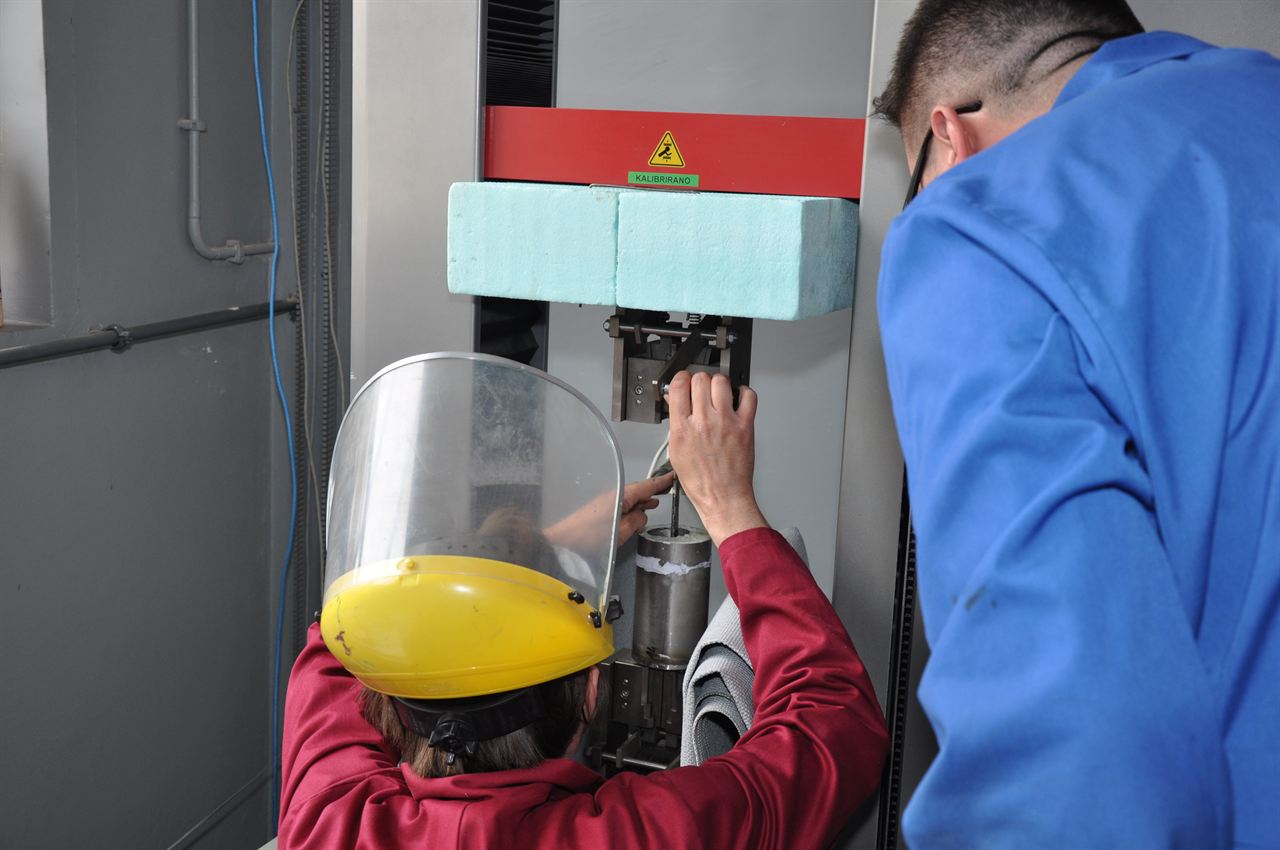
We carry out various kinds of destructive tests of base materials, welds and other permanent joints in order to determine quality and establish the conformity of materials. Mechanical tests of metallic and non-metallic materials include the tensile test (up to 500 kN), Vickers hardness measurements (HV 1 to HV 30), impact toughness testing (up to 300 kJ), bend, fracture and peel tests, the pipe flaring test, testing of chains, reinforcing steel, strands and suspension elements, and chemical analysis.
Metallographic examinations include macroscopic and microscopic examination, assessment of grain size, assessment of the content of non-metallic inclusions, assessment of graphite distribution in the material and assessment of the share of microstructural constituents.
What does the laboratory’s activity cover?
- mechanical tests of materials and permanent joints,
- metallographic examinations,
- chemical analyses,
- diagnosing damage to machine elements,
- preparing repair technology and help in choosing the technology of welding, brazing and joining,
- research of base and filler materials.
Contact
- Rok Anđelovhead of the laboratory, Ljubljana
- Nataša NovakMaribor+386 31 583 083natasa.novak@i-var.si